Copyright: © 2026 by the authors. Licensee: Pirogov University.
This article is an open access article distributed under the terms and conditions of the Creative Commons Attribution license (CC BY).

ORIGINAL RESEARCH

Sanitary and hygienic approaches to fungal contamination assessment in livestock production facilities

Masyagutova LM1,2 , Gizatullina LG1 , Bakirov AB1,2 , Kalimullina SM1 , Kabirova EF1
About authors

1 Ufa Research Institute of Occupational Medicine and Human Ecology, Ufa, Russia

2 Bashkir State Medical University, Ufa, Russia

Correspondence should be addressed: Liliya G. Gizatullina
Kuvykina, 94, Ufa, 450106, Russia; ur.liam@afu.tytitsni

About paper

Author contribution: Masyagutova LM — review of papers on the topic, literature analysis, data synthesis; Gizatullina LG — sampling for bacteriological analysis, testing, analysis of the results; Bakirov AB — data synthesis, editing; Kalimullina SN — testing, data acquisition and processing; Kabirova EF — data processing; all authors — approval of the final version of the article, responsibility for the integrity of all parts of the article.
Received: 2026-01-28 Accepted: 2026-04-18 Published online: 2026-06-22
|
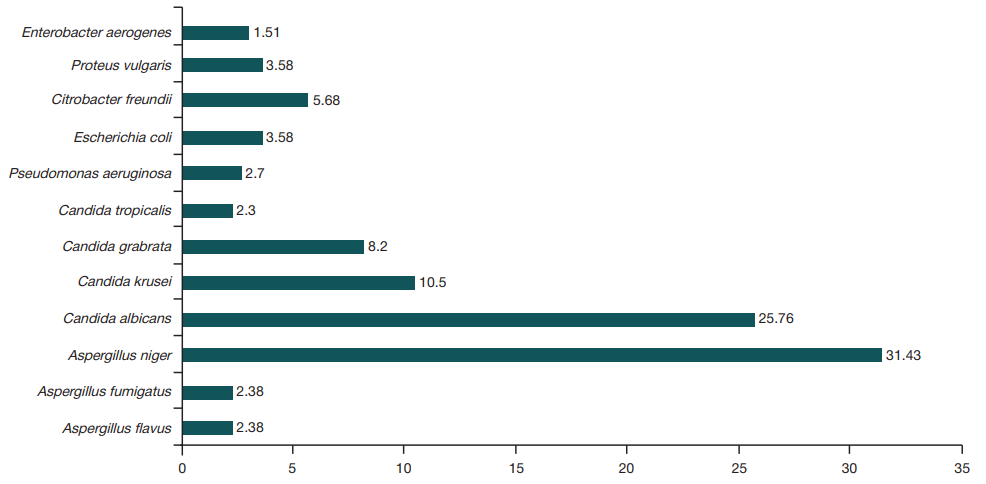
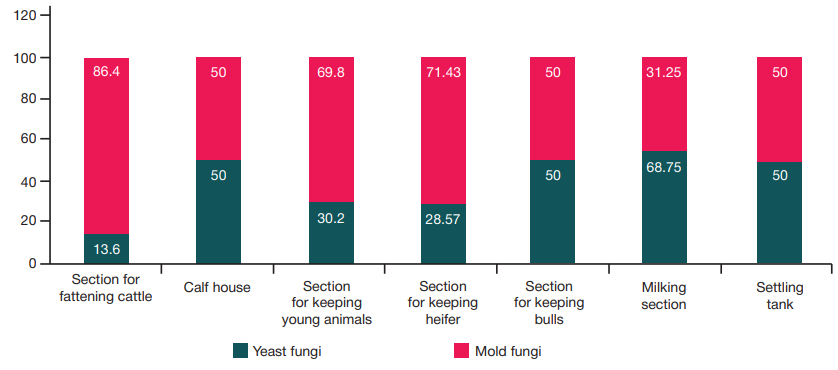
Fig. 1. Mycobiota of the air in the working area of the livestock complex premises (% of isolated samples)
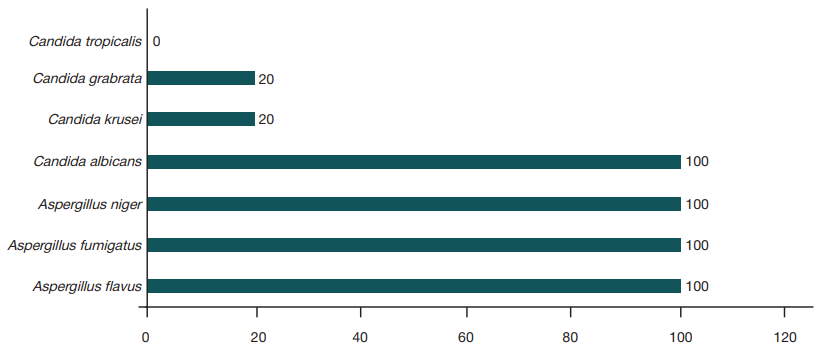
Fig. 2. Content of fungal flora in swabs from the working area (% of isolated samples)
Fig. 3. Typical composition of microbial communities of feeds collected in the livestock complex working areas (% of samples)
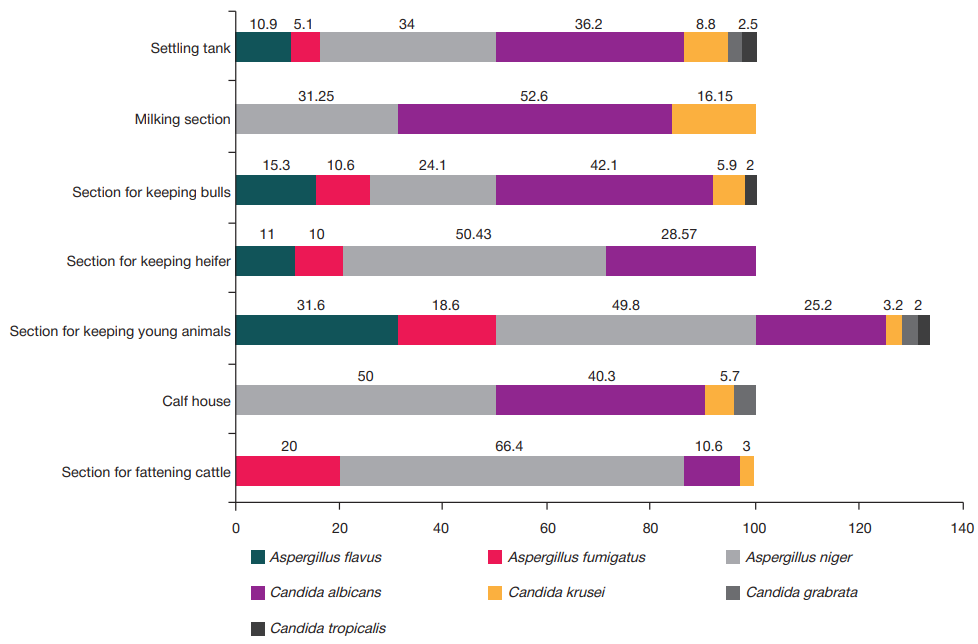
Fig. 4. Species composition of fungal microorganisms isolated from the bedding material in the livestock complex working areas (% of the total number of isolates)
Table 1. Number of strains of yeast-like fungi of the genus Candida isolated from the air and production environment samples at the livestock production facility in the studied period
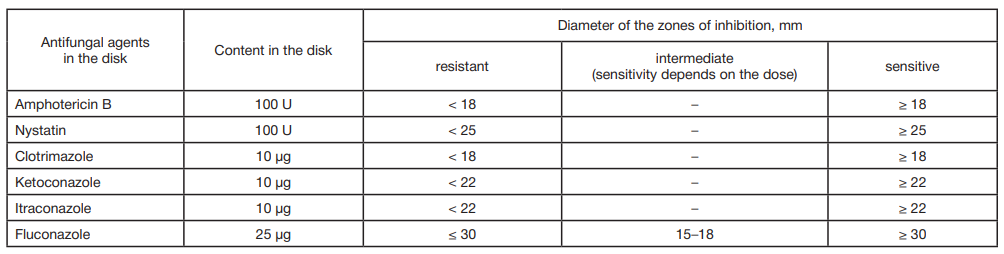
Table 2. Zones of inhibition of the growth of yeast-like fungi cultures by antifungal drugs
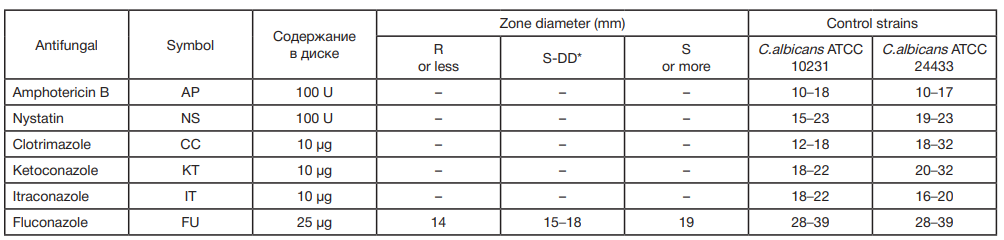
Table 3. Zones of inhibition (mm) by antifungals for reference strains
Note: the reference ranges are provided in accordance with the instructions of the disk manufacturer (HiMedia; India) and confirmed during the method validation in laboratory settings; * ― sensitive dose-dependent.
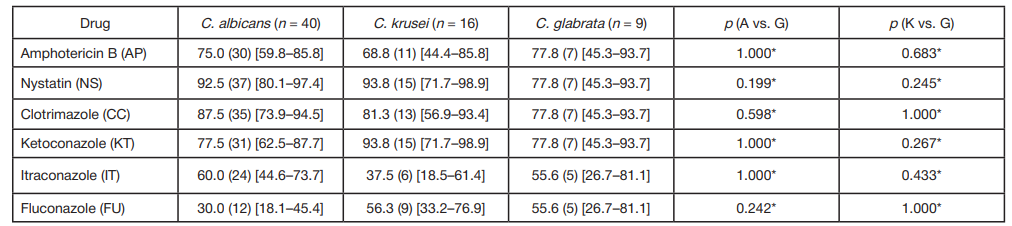
Table 4. Sensitivity of Candida spp. clinical isolates to antifungal drugs, % (abs.) [95% CI]
Note: n — number of strains tested; the percentage of sensitive strains is specified in the cells, absolute numbers are specified in parenthesis, 95% confidence intervals are specified in square brackets; p (A vs. G) — comparison of C. albicans and C. glabrata; p (K vs. G) — comparison of C. krusei and C. glabrata; * — non-significant differences (p > 0.05).